Choosing a luxury rental in Downtown Miami can feel simple at first glance. The photos are polished, the amenity decks are impressive, and nearly every tower promises skyline views and elevated living. But once you start comparing lease terms, parking setups, monthly fees, and condo rules, the real differences show up fast. If you want to rent well, not just rent quickly, you need a clear way to evaluate each building before you tour or apply. Let’s dive in.
Start With Downtown Miami Context
Downtown Miami is not a one-size-fits-all rental market. According to MIAMI REALTORS, multifamily asking rents in the Miami metro rose 0.6% year over year in February 2026, while Downtown Miami posted a stronger 2.9% year-over-year increase. At the same time, a large share of new multifamily construction is concentrated in Downtown Miami and nearby Edgewater, so renters are often comparing newer buildings with very different amenity packages and fee structures.
That matters because your best option is not always the newest tower or the one with the biggest pool deck. In this market, the smartest comparison looks at the full living experience, including location, operations, lease terms, and total monthly cost. A polished tour is helpful, but the details behind the tour are what protect your time and budget.
Compare Location Like a Daily Routine
In Downtown Miami, location is more than a pin on a map. Miami-Dade County notes that Metromover is a free elevated people mover that runs seven days a week across Downtown, Omni, and Brickell, with 21 stations. Government Center also connects to Brightline, Metrorail, and Tri-Rail, which makes transit access a real lifestyle factor for many renters.
If you work downtown, relocate often, or want less dependence on driving, station proximity should be part of your building review. A tower that looks similar on paper may feel very different if you can walk to Metromover, access Government Center quickly, or reduce the need for daily parking. For many professionals, that convenience has real value every week.
Ask Yourself These Location Questions
- How close is the building to your workplace or regular destinations?
- Will you use Metromover, Metrorail, Brightline, or Tri-Rail regularly?
- Do you need resident parking every day, or only occasionally?
- How important is guest parking for visitors or business travel?
- Are you choosing the building for speed, flexibility, or walkability?
Evaluate Amenities Based on How You Live
Most luxury buildings in Downtown Miami offer amenities, but not all amenity packages serve the same renter. The better question is not whether a building has upscale features. The better question is whether those features fit the way you actually live.
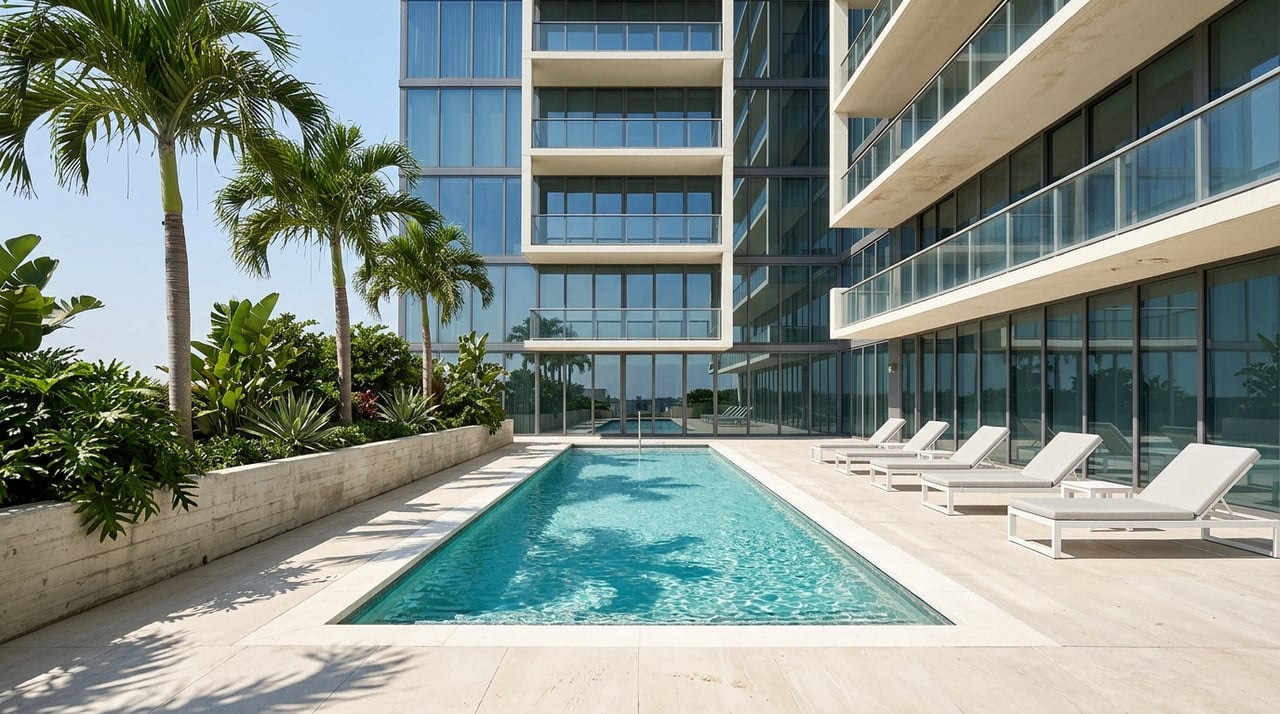
Current Downtown properties show how different the mixes can be. Grand Station promotes a rooftop terrace, fitness center, wellness and spa rooms, sauna and steam room, pool deck, package concierge, high-speed internet, and city views. Muze at Met highlights a concierge lobby, resident clubroom, yoga and cycling studio, wellness lounge, pool deck, valet parking, and gigabit fiber internet. Atlantic Square emphasizes two pools, a recreation deck, club lounge, amenity kitchen, fitness studio, interior courtyard, and skyline or partial water views.
A long amenity list can sound impressive, but it only adds value if you will use it. If you travel often, package handling and responsive lobby operations may matter more than a second pool. If you work from home, internet setup, lounge space, and building flow may matter more than a sauna.
Focus on Utility, Not Just Luxury
When touring, pay attention to:
- Fitness options you would actually use
- Wellness spaces versus social spaces
- Internet features and work-friendly common areas
- Pool deck layout and whether it feels usable or only decorative
- Package handling for frequent deliveries
- Parking type, especially valet versus self-parking
Look Closely at Unit Quality
In Downtown Miami, views and windows are major selling points, but the real experience depends on the exact unit. Research on current building marketing shows that Grand Station promotes expansive windows with city views, Muze features radiant city views, and Atlantic Square offers private balconies with skyline or partial water views. Those details can vary by stack, floor, and exposure.
That means you should evaluate the exact residence, not just the building brand. A high floor may bring more light, but exposure can also affect privacy, heat, and the type of view you actually enjoy. Two units in the same tower can live very differently.
If a residence is marketed as furnished or turnkey, treat it as a different product type from a standard unfurnished lease. The right test is not whether the furniture looks attractive in photos. The real question is whether the unit is truly move-in ready for your timeline and needs.
What to Check Inside the Unit
- Floor and stack location
- Balcony presence and usable outdoor space
- Window size and natural light
- View type, such as city, skyline, or partial water
- Furnished, unfurnished, or turnkey status
- Overall move-in readiness
Review Building Operations Before You Apply
Luxury living is shaped by daily operations as much as design. Concierge access, package systems, guest parking, pet screening, and office responsiveness all influence how smooth your experience will be after move-in. These are often the details renters notice most once the lease begins.
Published building information shows clear differences. Grand Station lists a 24-hour package concierge and notes that guest parking is available in a Miami Parking Authority garage for a fee. Muze at Met lists valet parking with a custom parking app. Atlantic Square notes that parking is provided relative to occupancy guidelines and publishes pricing on its fee sheet.
These are not small distinctions. If you receive frequent packages, host guests, travel for work, or drive regularly, the building’s operating system should be part of your decision from day one.
Compare the Full Cost, Not Just Base Rent
One of the biggest mistakes renters make is comparing advertised rent alone. In Downtown Miami luxury buildings, published costs can also include application fees, administration fees, deposits, amenity or lifestyle fees, parking charges, pet fees, insurance requirements, and transfer or early termination costs. A lower advertised rent does not always mean a lower overall monthly or upfront cost.
The examples in current Downtown Miami buildings make that clear. Grand Station publishes a $150 application fee per adult, a $350 administration fee, lease options from 7 to 14 months, and a pet fee of $300 per pet plus monthly pet rent. Muze at Met publishes a $150 application fee, $350 admin fee, deposits from $750 to $1,500 depending on the unit, a $65 monthly amenity fee, minimum renters insurance of $100,000 liability, and parking costs that vary by valet or self-parking. Atlantic Square publishes a $125 application fee, $350 administrative fee, a security deposit of $400 to $700, parking from $100 to $150 monthly, a $65 lifestyle fee, a $500 pet fee per pet, $35 monthly pet rent per pet, and a $2,000 transfer fee.
The smartest way to compare buildings is to ask for the full fee sheet and calculate the total monthly leasing price. That gives you a clearer picture of what you will really spend, especially if you need parking, have pets, or expect flexibility later in the lease.
Build a True Cost Checklist
Ask for these items in writing:
- Base rent
- Application and administrative fees
- Security deposit or other required deposits
- Monthly amenity or lifestyle fees
- Parking costs for residents and guests
- Pet fees, pet rent, and screening charges
- Renters insurance requirements
- Early termination, transfer, move-in, or move-out charges
Understand Lease Terms and Approval Timing
Not every Downtown Miami luxury building offers the same lease flexibility. Some properties publish lease terms from 7 to 14 months, while others do not allow leases shorter than 7 months. If your move is tied to a job contract, relocation package, or uncertain timeline, lease length should be one of your first filters.
Approval timing also varies by building. Public materials commonly reference rental history, income verification, credit checks, criminal background screening, and pet screening, but they often do not promise a universal turnaround time. That means you should ask for the exact approval checklist and expected review window before paying any application fee.
For busy professionals and relocating renters, this step can save both money and frustration. If a building does not fit your timeline, pet profile, income documentation, or lease-length needs, it is better to know before you begin the application process.
Condo Rules Can Affect Your Rental
If the unit is in a condominium or mixed-use condominium, the building may have additional rules that shape your rental experience. Florida law requires developers of larger residential condominiums to provide a prospectus or offering circular that describes items such as unit-use restrictions, leasing restrictions, assessment obligations, rental or land-use fees for common facilities, and copies of the declaration, bylaws, and related documents.
For renters, the practical takeaway is simple. In a condo tower, the real rules may be found in the condo documents and application materials, not just in the marketing brochure. Those documents can affect rental flexibility, move-in procedures, fees, and everyday use of the property.
Florida law also states that amendments restricting rental duration or the right to rent apply only to consenting owners and owners who acquire title after the amendment takes effect. While that rule applies at the ownership level, it is another reminder that condo buildings can evolve over time and that the governing documents matter.
Ask for These Documents Early
Before you apply, ask whether you can review:
- The application packet
- Building or association move-in rules
- Declaration and bylaws, if applicable
- Any published leasing restrictions
- Any building-specific use or access policies
Use a Practical Touring Framework
A luxury tour should help you narrow choices, not create more confusion. If you tour without a comparison framework, many buildings will blur together. The better approach is to score each building against your actual priorities.
For example, one renter may care most about valet parking, furnished setup, and a fast commute. Another may prioritize lease flexibility, package handling, and lower recurring fees. The right building is the one that best matches your lifestyle, not the one with the flashiest presentation.
A Smart Downtown Miami Tour Checklist
Before or during each tour, confirm:
- Exact lease term options
- Whether the unit is furnished, unfurnished, or turnkey
- Resident parking type and monthly cost
- Guest parking setup
- Required monthly fees beyond rent
- Pet rules and per-pet charges
- Approval checklist and timing
- Package handling and concierge support
- Any condo or association rules that apply
Why Pre-Screening Matters
In a market with active new construction, rising rents, and wide variation in policies, pre-screening buildings can save you significant time. It can also help you avoid wasted tours and unnecessary application costs. That is especially important if you are relocating, managing a corporate timeline, or trying to compare furnished and unfurnished options side by side.
A concierge-style search works best when each building is filtered first by your move date, target lease length, parking needs, pet profile, furnishing preference, and budget ceiling. Once those basics are aligned, touring becomes faster, more focused, and far more useful.
If you want guidance that feels tailored instead of transactional, working with a local advisor can make the process much easier. Miami Rental Queen with Leni Giraldo offers personalized luxury rental search support, relocation coordination, and lease negotiation across Downtown Miami and nearby high-rise neighborhoods.
FAQs
What should you compare first in Downtown Miami luxury rentals?
- Start with location, lease term, total monthly cost, parking setup, and whether the unit is furnished or unfurnished.
How do fees affect Downtown Miami rental comparisons?
- Fees can change the real cost of a rental quickly, so you should compare base rent alongside application fees, deposits, amenity fees, parking, pet charges, insurance requirements, and any transfer or early termination costs.
Why does parking matter when evaluating Downtown Miami buildings?
- Parking setups vary widely between valet, self-parking, and public garage arrangements, and guest parking may be handled separately from resident parking.
What should you ask about condo buildings in Downtown Miami?
- Ask to review the application packet, move-in rules, declaration, bylaws, and any leasing or use restrictions that may affect your rental experience.
How can you tell if a furnished Downtown Miami rental is right for you?
- You should evaluate it as a move-in-ready product by confirming what is included, how quickly you can settle in, and whether it fits your lease length and lifestyle needs.
When should you ask about approval timing for a Downtown Miami rental?
- Ask before paying any application fee so you can confirm the checklist, screening standards, and expected review window for that specific building.